
How Claude Opus 4.7 Is Transforming Industries and Startups in 2026
Artificial intelligence is no longer a supporting tool in software development—it is becoming a core part of how products are built, scaled, and delivered. With the release of Claude Opus 4.7, this shift has accelerated significantly.
Unlike earlier AI models that focused on assisting developers with isolated tasks, Opus 4.7 represents a move toward systems that can handle meaningful portions of real-world work. This has direct implications not only for software teams but also for startups, enterprises, and consulting-driven businesses.
In this article, we break down how Opus 4.7 is changing industries, why it matters for startups, and how businesses can leverage it to improve productivity, reduce costs, and accelerate delivery.
The Shift from AI Tools to AI-Driven Workflows
For years, AI tools were primarily used for:
- code suggestions
- autocomplete
- simple automation
- content generation
These were incremental improvements. They made developers faster, but they did not fundamentally change how work was done.
Opus 4.7 introduces a different paradigm.
It enables:
- multi-step reasoning
- long-context understanding
- structured task execution
- partial autonomy in workflows
This means AI is no longer just assisting—it is participating in execution.
For software teams, this translates to a shift from:
“developers using tools” → “teams orchestrating AI systems”
Why Claude Opus 4.7 Matters for Startups
Startups operate under constraints—limited capital, small teams, and pressure to ship fast. Opus 4.7 directly addresses all three.
1. Faster Product Development Cycles
With improved coding and reasoning capabilities, teams can:
- generate production-ready code
- refactor existing systems
- build features end-to-end
What previously took days can now be reduced to hours with proper workflows.
This is not about replacing developers—it is about amplifying output.
A small team can now:
- build MVPs faster
- iterate based on feedback quickly
- move from idea to deployment without heavy resource dependency
2. Reduced Dependency on Large Teams
Traditionally, building scalable products required:
- backend engineers
- frontend engineers
- QA teams
- DevOps support
With AI-driven development powered by models like Opus 4.7:
- fewer people can handle broader responsibilities
- repetitive engineering tasks are automated
- debugging and testing cycles are shortened
This creates a major advantage for early-stage startups.
3. Faster Validation of Ideas
Startups often fail not because of poor ideas, but because of slow execution.
Opus 4.7 enables:
- rapid prototyping
- quick feature experimentation
- faster go-to-market cycles
This reduces the cost of failure and increases the speed of learning.
Industry-Wide Impact of Claude Opus 4.7
The impact is not limited to startups. Multiple industries are being reshaped by this shift.
Software Development and SaaS
This is where the impact is most visible.
Teams are now able to:
- automate large parts of development workflows
- generate documentation alongside code
- maintain and refactor legacy systems more efficiently
AI is no longer just a developer assistant—it is becoming part of the development pipeline.
Business Consulting and Digital Transformation
Consulting firms are leveraging AI to:
- analyze business processes
- generate reports
- propose technical solutions
With Opus 4.7:
- recommendations become more structured
- outputs become more actionable
- turnaround time reduces significantly
For clients, this means:
- faster insights
- lower consulting costs
- better implementation speed
Customer Support and Operations
AI systems powered by advanced models can now:
- understand complex queries
- generate contextual responses
- assist in internal workflows
This reduces:
- support workload
- response time
- operational overhead
Content, Marketing, and Outreach
With improved reasoning and context handling, Opus 4.7 enables:
- high-quality long-form content generation
- personalized outreach at scale
- structured marketing workflows
For SaaS businesses, this is especially important:
- lead generation becomes more efficient
- outreach becomes more targeted
- conversion rates improve with better messaging
Opus 4.7 vs Opus 4.6: What Actually Changed
While Opus 4.7 is an improvement, understanding the difference is important for practical adoption.
1. Coding Capability
Opus 4.7 shows a clear improvement in:
- multi-file code handling
- debugging complex issues
- completing end-to-end tasks
Opus 4.6 was strong, but often required:
- more guidance
- more corrections
Opus 4.7 reduces that overhead.
2. Workflow Execution
Opus 4.6 functioned more like an assistant:
- good at answering
- limited in executing full workflows
Opus 4.7 moves toward:
- task completion
- structured output
- better follow-through
3. Reliability and Accuracy
One of the biggest improvements is consistency.
Opus 4.7:
- makes fewer logical errors
- follows instructions more precisely
- produces more usable outputs
4. Trade-offs
Not everything is strictly better.
In some cases:
- Opus 4.6 can be more rigid and structured
- Opus 4.7 can prioritize flexibility over strict formatting
However, for real-world use, 4.7 is more practical.
How AI-First Development Companies Are Using This
The biggest impact is not just the model itself—it’s how companies use it.
As an AI-first software development company, we integrate models like Opus 4.7 directly into our workflows.
This includes:
- AI-assisted backend and frontend development
- automated testing and debugging
- faster system design and architecture planning
- integrating AI capabilities into client products
Measurable Benefits We’ve Observed
From real-world usage:
- Significant increase in development speed
- Faster turnaround for client projects
- Improved consistency in code quality
- Reduced manual effort in repetitive tasks
More importantly, it allows us to:
- deliver solutions faster
- experiment with ideas quickly
- build scalable systems efficiently
Integrating AI into Existing Systems
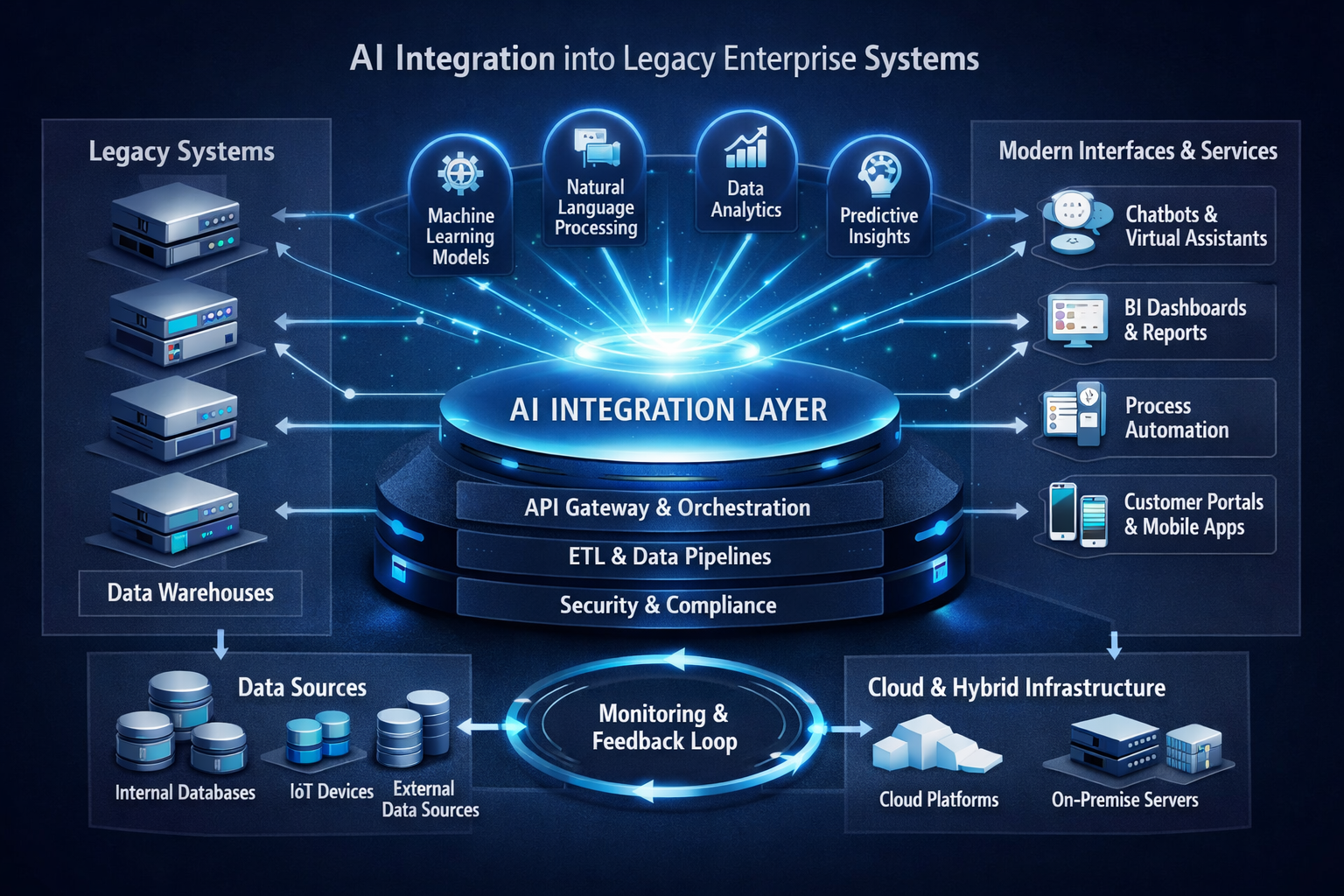
One of the most valuable applications is integrating AI into:
- legacy systems
- SaaS platforms
- internal business tools
With Opus 4.7, businesses can:
- enhance existing software without rebuilding everything
- introduce automation layers
- improve user experience with AI-driven features
This is where real transformation happens—not just in new products, but in improving existing ones.
The Strategic Advantage: Speed + Efficiency
The real advantage of adopting models like Opus 4.7 is not just capability—it is speed.
Businesses that adopt AI-driven development gain:
- faster execution
- lower operational costs
- better scalability
This creates a competitive gap.
Teams that rely purely on traditional workflows will struggle to match:
- development speed
- iteration cycles
- delivery timelines
A Clear Reality: AI Adoption Is No Longer Optional
The shift is already happening.
Companies that are:
- integrating AI into workflows
- adopting AI-driven development
- optimizing processes with models like Opus 4.7
are moving faster than those that are not.
This is not a future trend—it is a present advantage.
Final Thoughts
Claude Opus 4.7 represents more than just an incremental improvement in AI models. It signals a broader shift toward AI-driven execution across industries.
For startups, it enables faster growth with fewer resources.
For enterprises, it improves efficiency and scalability.
For software teams, it changes how products are built.
The key is not just using AI—but integrating it strategically into workflows.
Work With an AI-First Development Team
If you are looking to:
- build AI-powered software
- integrate AI into existing systems
- accelerate your product development
working with a team that already operates with AI-first workflows can make a significant difference.
Book a call or contact us for consulting to explore how AI-driven development can be applied to your business.